

Choosing the right shower valve can be confusing.
Should you install a single valve or two valves? Is it best to use copper or PEX?
What are all the parts you’ll need? And what’s the total cost?
I answer all these questions and more, so let’s get started.
Your Shower Valve Guide
I’ve organized this shower valve guide into five parts:
- Shower Valve Basics
- Understand Your Needs
- Which Valve is Best for a Shower
- Shower Valve Replacement Cost Explained
- Complete Step-by-Step Video
You can tap the above links, and they’ll take you to the specific part.
Also, you might want to grab a pen and paper. That way, you can take some notes and use those to buy your shower valve.
Shower Valve Basics
What is a shower valve, and why does it matter?
A shower valve is located behind the shower trim, which is what you see on the shower wall.
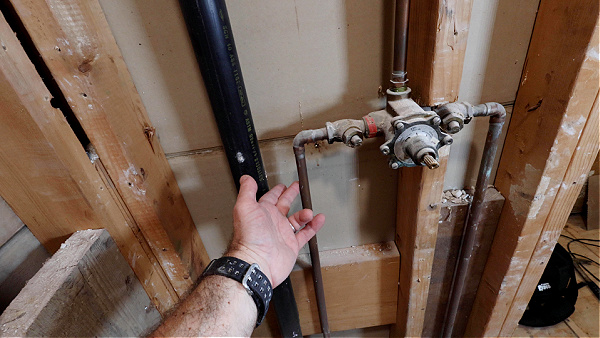
It controls the water flow and water temperature in a shower.
The shower valve is installed at the beginning of a shower remodel.
Then the shower is waterproofed, and the tile is butted against the valve.
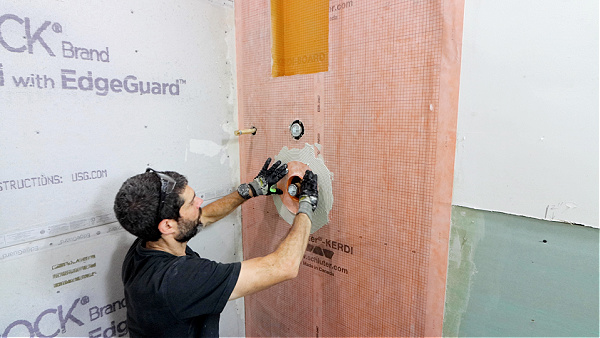
The final step is to install the cartridge, trim, and handles.
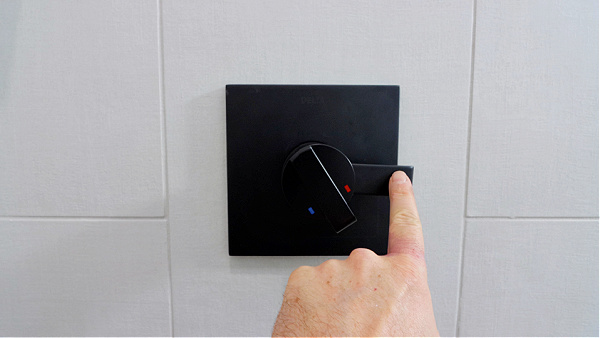
Ideally, the shower valve should be simple so that it’s easy to service and less prone to problems down the road.
And this is one reason I recommend Delta shower valves – more on this later.
Understand Your Needs
Before choosing a shower valve, you need to assess your needs.
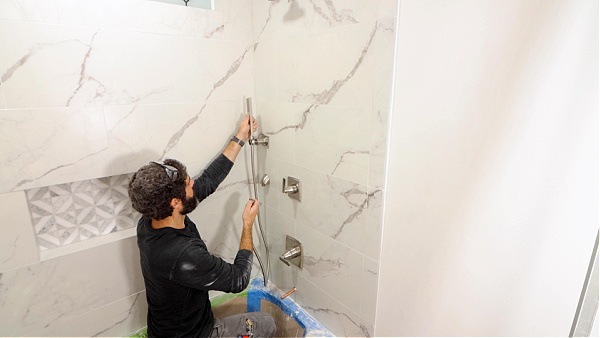
For example, do you need a single showerhead?
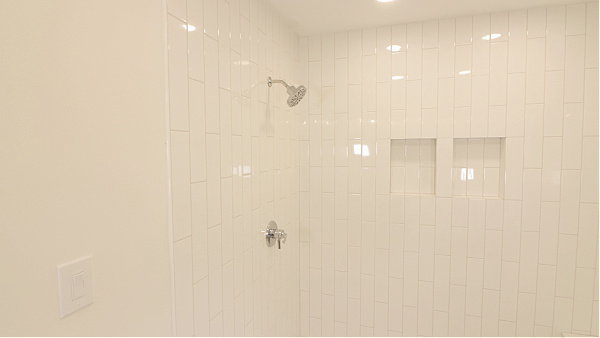
Or do you want a shower head and a handheld shower wand?
I love shower wands because they’re nice for cleaning the shower, pets, or kids.
In addition, you should consider the type of water supply lines you’ll be using inside the shower.
For instance, will you use copper, PEX B, or PEX A?
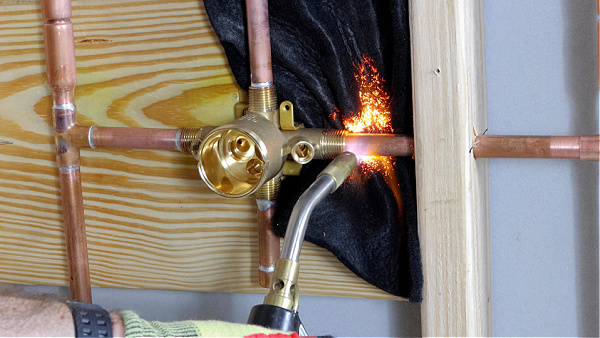
This is an important question to answer, and I recommend choosing the shower valve based on the type of water supply line.
So, again, figure out if you need a single shower head or a shower head and a shower wand.
And also determine the type of water supply lines to be used.
That said, which valve is best for a shower?
Which Valve is Best for a Shower
Delta is the best valve for showers for multiple reasons.
First, the price is reasonable.
The Delta MultiChoice is between $50 and $80.
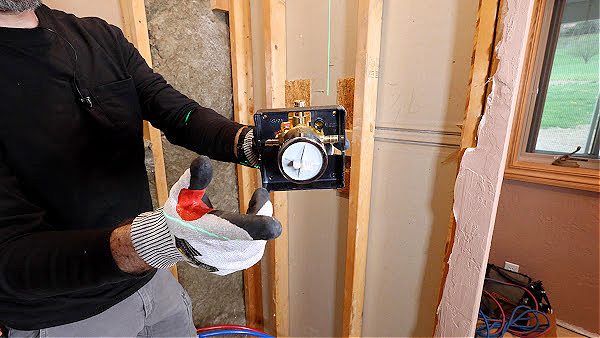
The cost depends on the type of water supply lines being used.
This brings me to the second reason I like Delta.
You can choose the shower valve based on the water supply lines.
For example, Delta’s R10000-UN for copper lines is roughly $50.

You can solder copper into all four ports of this valve.
In addition, the Delta R10000-PFS-PX for PEX B is about $55.

This valve is nice because you can crimp PEX B directly to the valve.

I also use the Delta R10000-PFS-MF for PEX A, which costs $55.

Again, you can expand PEX A and install it right into the valve ports.

If you want only a showerhead, these three Delta MultiChoice valves are all you need.
But if you need a shower head and a handheld shower wand, there’s a bit more to consider.
There are two ways to get a handheld shower with a Delta valve.
The first way is with the Delta R22000.

This shower valve combines the main valve and diverter valve into one unit.
Admittedly, this is nice if you don’t like soldering extra plumbing connections. By the way, here’s a good tutorial for soldering vertical joints if you want to build your skill.
The downside is having to tile around it.
And the fact that you need to solder copper into it or use additional fittings for PEX.
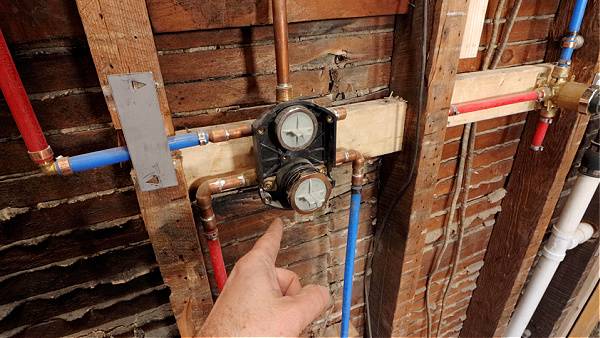
The second option is the Delta R11000 diverter valve.

It’s smaller than the R22000 but has to be attached to the R10000.
The downsides are similar to the R22000. You need to solder it to copper or use fittings with PEX A or PEX B.
The upside is the size.
It’s small, and this makes tiling around it a bit easier.

So remember, if you want a handheld shower wand, you’ll need to get either the R22000 or the R10000 valve plus the R11000.
With all this said, what is a ballpark cost for shower valve replacement?
Shower Valve Replacement Cost Explained
Shower valve replacement cost is tricky. But I’ll do my best to make it as clear as possible.
For this example, I’m talking about replacing a shower valve during a shower remodel.
So the walls will likely be wide open with lots of access.
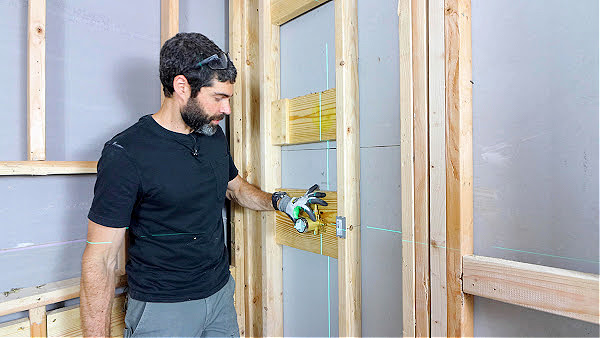
As you saw, the Delta MultiChoice is $50 to $80.
Add another $100 for the Delta R11000 diverter valve if you want a shower wand.
Keep in mind, the Delta R22000 combines the R10000 and R11000 and is about $150.
You’ll need at least one 1/2 inch 90-degree Drop Ear for the shower head.

And a second Drop Ear for the shower wand if installing one.
This is true for copper or PEX.
The cost for one Drop Ear is about $12.
Now for the water supply lines.
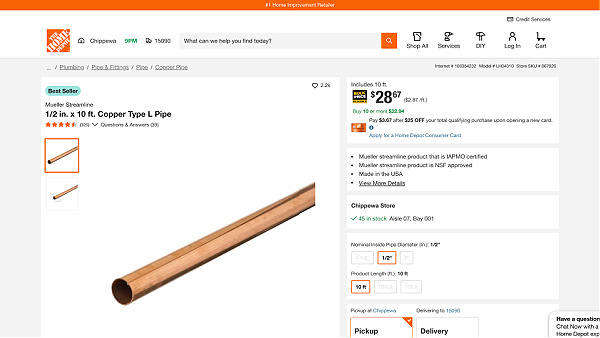
If you’re using copper, get two 1/2-inch by 10-foot pipes. The cost for Type-L in that length is $30. Thus two sticks are $60.
If you’re using PEX B, the same length of pipe (20 feet) is $10, i.e., $5 for a 1/2-inch by 10-foot section.

If you’re using PEX A, it’s also about $10 for 20 feet.
I recommend using red PEX for the hot, blue for the cold, and white for the riser pipe.
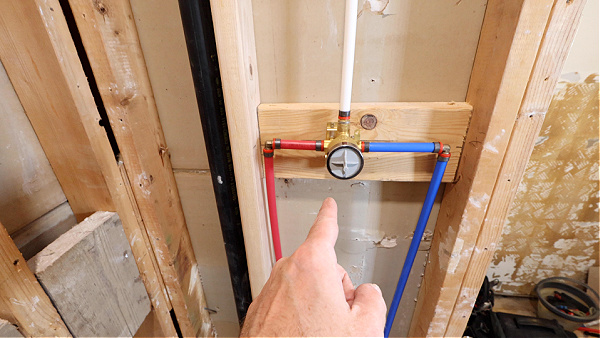
Keep in mind that you’ll need fittings for copper and all the soldering tools. The total cost for that could easily be more than $100.
For PEX B, you’ll need crimp rings, fittings, and a crimping tool. That cost is roughly $80 to $100, but can increase based on how many fittings and crimp rings you need.
PEX A requires an expansion tool, expansion sleeves, and fittings. The total cost is close to $475 minimum, mostly because any good expansion tool with an auto-rotating head costs $400 to $500.
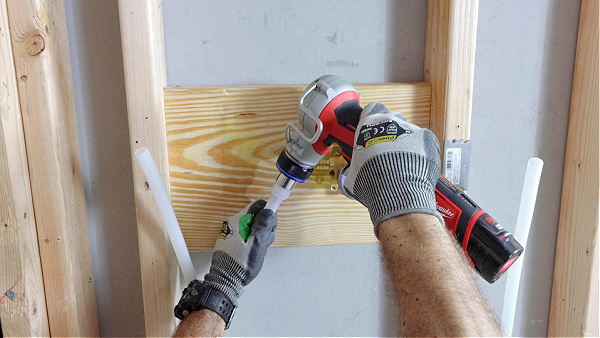
If you’re a DIYer, I’d consider renting the PEX A expansion tool and that would cost $50 to $75 for the day, which is way more cost-effective than buying one.
Labor can cost $150 to $300 minimum because it depends on the time and complexity of the installation.
Here are the ballpark cost estimates,
Total cost for copper with the Delta R10000 is $400 to $500.
The rough estimate for PEX B with the Delta R10000 is $375 to $475
The rough estimate for PEX A with the Delta R10000 is $350 to $450 if the PEX A expansion tool is rented or your plumber has one.
The higher prices in the range factor in the addition of the handheld valve components.
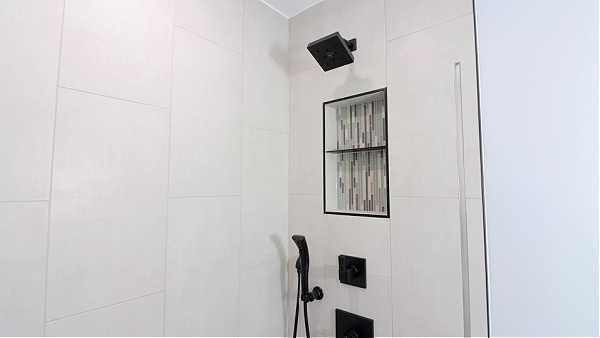
Also, keep in mind that these prices DO NOT include the shower valve trim kit. That can cost an additional $150 on up.
The trim kits include the escutcheon for the valve, cartridge, handles, shower arm, and shower head.
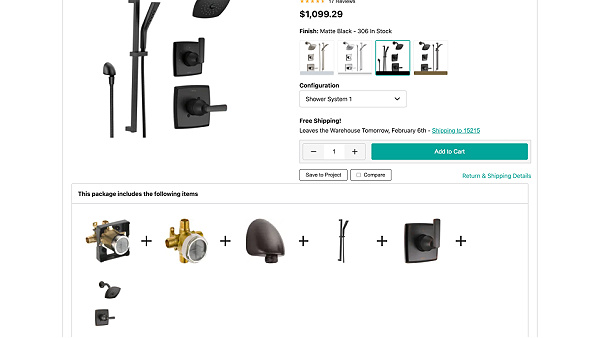
And Ferguson Home has packages like this one for the Delta Monitor that include the valves and trim. So always be aware of this when buying your shower valve.
With all this in mind, you might be asking, which shower valve is the fastest to install?
Hands down, it’s the Delta MultiChoice with PEX A.

Once you get the PEX A adapters installed, it’s amazing how fast the installation takes.
I typically do the hot water line first, followed by the cold, and finish with the riser to the drop ear.
Now here’s one important tip,
You need to know the backer board and tile thickness BEFORE installing any shower valve.
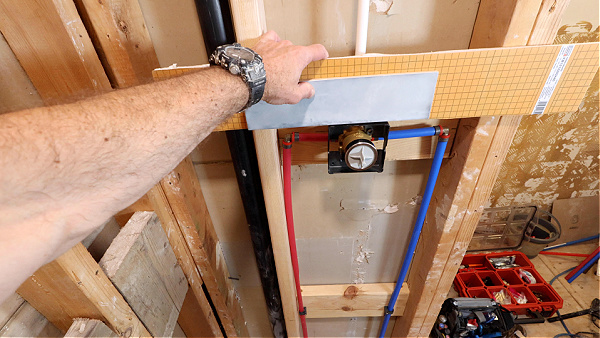
That way, the shower valve can be set to the proper depth.
As such, I recommend having your backer board and tile on hand when installing the valve. This will help you avoid a common tile shower wall mistake.
Here’s my step-by-step video that puts all these tips into action
Choosing the right shower valve is just one step in a bathroom renovation.
If you want to unlock all my bathroom remodeling videos, courses, and personal coaching, join Home Repair Tutor today – it’s one of the best online resources for anyone renovating a bathroom. Tap the button below to learn more
Thanks for reading this guide. I hope it helps you out!
Jeff